Saturday, 20 May 2023

BHD

The battle of Mogadishu in 1993 gets a vivid big-screen treatment from a great filmmaker at the height of his technical proficiency and creative powers. Ridley Scott’s BLACK HAWK DOWN (2001) is a true-story horror of a military operation going tragically wrong. It shows what happens when professional soldiers confront a warlord’s militia forces. 


When any thorough tactical advantage is lost, American squads are outflanked and besieged by Somali belligerence and ferocity. Gritty and messy scenes of airborne troops are quite unnervingly mixed with a more traditional sort of gung-ho US action, epitomised by Tom Sizemore as the battalion commander. He strides purposefully through the mayhem of sundry guerrilla strikes in urban slums, to deliver a fearless portrait of unflinchingly single-minded heroism, staring into the face of sudden death and wanton destruction. Ewan McGregor, Eric Bana, and Sam Shepard are excellent in their supporting roles. 

Centred on a pair of helicopter crashes, and the desperate bravery of rescuers, it’s one of the greatest war movies ever made. John Moore’s similarly themed Behind Enemy Lines (2001), about a US jet pilot shot down in the Bosnian war, fails to match its grim intensity.

Rotary Action archive page about Black Hawk Down. 

X-Men


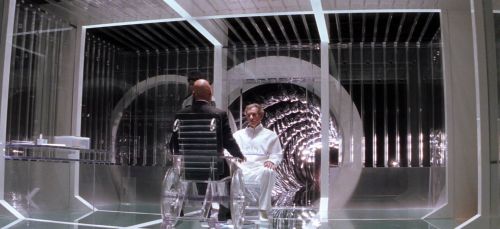
A starter-pack for this century’s golden age of superhero cinema, Marvel actioner X-MEN (2000) was primary, in many respects, although one previous low-budget attempt to launch a franchise was made for introducing mutants in Jack Sholder’s TV movie Generation X (1996). Bryan Singer’s fantastic adventure boasts  plenty of remarkable sci-fi aesthetics, with its fast cutting impressively blending staged stunts and special effects to ensure noisily convincing fights, frequently with the animalistic Wolverine (Hugh Jackson). 


Impossibly agile kids, talented prodigies, and social misfits, all despised by one witch-hunting senator, that make up the secluded outsider community of Xavier’s school for gifted students in New York state, are just a front for Prof X’s super-team. These X-Men aren’t keen on fighting for Superman’s much vaunted 'truth, justice, and the American way' but they will stop terrorist plots to irradiate world leaders at a UN summit, while also trying to save mankind from self-destructive impulses - which is altogether decidedly more pragmatic and honest than those woolly principles that Krypton’s last son usually upholds.

Xavier and Magneto are old friends who cannot agree on the shape of things to come. Rogue seems doomed to victim status, Wolverine is typically quite happy to just slay his enemies, and nice guys finish first, if not always like winners against prejudice, while the young X-Men are full of doubts and fears, just like us regular folks. After this major success, the Marvel way looked like the only way for this post-millennium world.  

Sequels tend to signify commercial exploitation, usually tolerated only as a necessary evil of an industry that needs to keep the reels turning. Yet the comics format - unlike novels, short stories, or plays - as source material for movies, would seem to demand a filmed trilogy, at least. Singer’s  X-MEN 2 (aka: X2, 2003) introduced German, Russian and other characters, with the spectacular action playing on a broader scale, that includes Wolverine versus Deathstrike in the greatest knife-fight ever filmed. 

Friday, 19 May 2023

Requiem FAD


Critically described as 'the greatest movie you’ll never want to see again', this intense psycho-drama of how drugs crush any shred of humanity in addicts is a bleak tragedy of errors. On first viewing, Darren Aronofsky’s REQUIEM FOR A DREAM (2000) was so powerfully grim, it was a week before I recovered from its lingering depressive mind-set. Hyper-charged editing patterns combine with surrealistic images and uncompromisingly morbid repetitions to create its unsettling moods. The provocative affect is mesmerising yet equally disturbing.

The furious barrage of hypnotic visuals sets RFAD far apart from any typical junkie pictures, like Terry Gilliam’s black-comedy Fear And Loathing In Las Vegas (1998), so its relentlessly downbeat model of cynical pessimism eventually becomes a mind-shattering experience, that’s also heart-breaking because an addict’s quest for yet another dose of high sometimes mirrors wishful thinking about freedom  from inhuman cruelty in this modern world. Drug culture means no possibility of any fleeting escape from that all-consuming desire for a fix. 

While Ellen Burstyn steals the show as widow Sara Goldfarb, hooked on diet pills and obsessed by trashy TV shows, her low-life son Harry (Jared Leto), and his girlfriend Marion (Jennifer Connelly), fail as heroin dealers, very soon falling into crimes that spiral all the way down to scenes like hell on Earth. Some pictures are unforgettable. This is not usually classified as genre horror and yet that’s exactly what this scary, weird, and crushingly depressing drama really is. 

What sticks in memory is genuine horrors without a pause, bloated with grisly shocks and intense suffering, evocative of social depravity for a devastating emotional landslide of startling images. Mental collapse and physical infection eventually results in hospitals or prison abuse, with paranoid hallucinations until... there’s no such thing in reality as a happy ending that exists beyond fantasy. 

Stunning evidence of a visionary imagination this cements director Aronofsky’s reputation as a fascinating American auteur to watch, and so his later work, in particular, The Fountain (2006), Black Swan (2010), Noah (2014), and Mother! (2017), reveals a talent for conjuring up weird wonders to rival those by David Lynch.

Thursday, 18 May 2023

Crouching Tiger, Hidden Dragon


Ang Lee’s magnificent ‘wuxia’ sword-play adventure proved to be a breakthrough production as the biggest international success for Chinese language cinema. CROUCHING TIGER, HIDDEN DRAGON (2000) established a mainstream presence for Asian costume-drama martial arts, with its great popularity reflecting that of The Water Margin series on British TV in the late 1970s. Chow Yun-fat and Michelle Yeoh lead a varied cast, and CTHD helped to make Zhang Ziyi a star. Certainly, this fantasy is an improvement on the director’s western Ride With The Devil (1999). It offers a wonderfully seamless blend of kung fu thrills, romantic dramas with engaging characters, and plenty of exhilarating action, even if there’s about 15 minutes of set-ups, establishing dialogues and introductions, before the first battle sequence.

The main stars are both great, and they easily dominate proceedings with a hypnotic presence not always shared by the supporting cast, although Zhang is exceptional as Jen, a young rebel against several Chinese traditions. The story is basically familiar hokum, simply but honestly revising many of this genre’s Asian elements - about honourable warriors with idealistic passions, and the minutiae of a closed society still alien to westerners - but also inverting (and re-inventing) other diverse themes, including decisive feminism, optimistic nostalgia, and the tragedy of heroes burdened by repressive social mores.

Best known for his stylised gangster roles, Chow swaps handguns for a Green Destiny sword, and sunglasses for a Manchu ponytail. Yet, even with a newfound mastery of a blade, instead of his trademark automatic pistols, the two heroines eclipse Chow’s reluctant champion, and the longest combat scenes involve women. There’s one vigorous duel that’s equal to any of the spectacular fighting displays in The Matrix (1999), although unsurprisingly, because extremely capable stunts master Yuen Woo-ping was action choreographer on both films.

Unlike typical Hong Kong movies, such as New Dragon Gate Inn (1992), this lacks an almost relentless pacing, with black comedy, and general weirdness, but CTHD offers a distinctive energy, with high levels of visual polish and artistic style that only major projects can hope to achieve. I really can’t recommend this enough, especially to any wuxia fans who ever felt disappointed by the often low-grade finishing roughness applied to many similar movies.

Wednesday, 17 May 2023

Eternals

Oscar-winner ChloĆ© Zhao’s condensed epic brightens the possible future of superhero cinema with splendid narrative style while it crams the scope of what previous Marvel movies did in their first decade, and a franchised scale of ‘DC extended universe’ from Man Of Steel (2013) to Justice League (2017) into a single feature layered with mega-structural plot-arcs, and flashback episodes that span millennia of the Earth’s history. In essence, ETERNALS (2021) is the greatest story in the MCU. Its imaginative cosmology is a blend of sci-fi with ancient myths, where android immortals protect humanity from alien monsters. Zhao had read Arthur C. Clarke’s novel 3001: A Final Odyssey (1997) which explains early views of starship ‘Domo’, like a triangular monolith approaching Earth. 


After ten superheroes finish their mission to exterminate monstrous Deviants, any collaboration slowly breaks down while they await further orders from Celestials. Now scattered around the world, their distinct identities blur with legendary fictions, especially notable for the characters of Ikaris, Gilgamesh, Phastos, Thena, and Sprite. When new Deviant mutants appear and their secret origins are revealed, the group is drawn back together for apocalyptic battles with space ‘gods’, and against each other.


Much better than expected, ETERNALS eventually reveals its artistic genius, and it’s a marked improvement on other Marvel adventures, like Black Widow or Shang-Chi And The Legend Of The Ten Rings (both 2021). It’s good to see gigantic space-beings presented just as they appear in bizarre comic-books, instead of a ‘realistic’ depiction like ‘Galactus’ in Tim Story’s faulty Fantastic Four: Rise Of The Silver Surfer (2005). In perhaps this movie’s definitive sequence, a dangerous Thena (formidable Angelina Jolie) proves that her ‘goddess of war’ persona cannot be defeated, or even disarmed, but she surrenders - albeit briefly, before she kills the shape-shifting humanoid ‘Kro’.


ETERNALS boasts just the right balance of timeless uncanny perspective, droll MCU franchise in-jokes, some worthy but sardonic human dramas, and plenty of SF genre thrills. With its grand ‘uni-mind’ link-up finale to demo gestalt powers, an intriguing teaser intro about Dane Whitman - alias: the Black Knight, and the greatest ever use of Pink Floyd’s classic song ‘Time’, this establishes new conceptual standards for any future super-teams to match, if they and their makers dare to try.